SEO, GEO and AEO overlap. Start by making one useful page accessible, clear and supported by evidence, then check the requirements and reporting for the search systems that matter to your audience.
By Sherry Wood · Updated October 31, 2026
What these three terms actually mean
SEO, GEO and AEO describe overlapping ways of helping people discover useful information. SEO means search engine optimization. GEO means generative engine optimization, a term often used for visibility in AI-generated answers. AEO means answer engine optimization, a term used for content that answers questions in search and assistant experiences. You do not need three websites or three competing editorial calendars to begin.
The useful question is more concrete: can someone find your page, understand its answer, assess its evidence and take the next step? On a new website, that gives you a manageable place to start. Learn the vocabulary so you can evaluate advice, then turn it into work on an actual page.
Compare the goals without creating three separate projects
Imagine an illustrative website that helps apartment dwellers choose puzzle storage. A visitor might search for a small puzzle board, ask an assistant how to store a half-finished puzzle, or compare products through an AI search experience. The same useful page might address several of those needs, although no publisher can choose every place it will appear.
| Term | Typical focus | A practical website task |
|---|---|---|
| SEO | Discovery through search engines | Publish an accessible, well-linked comparison |
| GEO | Visibility in generated answers | Explain the decision with specific, checkable evidence |
| AEO | Answering a reader’s question clearly | Give the answer before the supporting detail |
This is a terminology map, not a performance comparison. None of these labels tells you how much traffic a page will receive.
What Google says about GEO and AEO
Google’s guidance for generative AI search explicitly discusses GEO and AEO as terms used for AI visibility work. From Google’s perspective, the work remains SEO. Its AI features use the underlying search index and ranking systems; the basics still matter.
Google also says special AI text files and special schema are not required for its AI search features. That is a useful way to evaluate a sales pitch. Ask which concrete problem a proposed service solves, which system its claim concerns, and what evidence supports the claimed effect. A name for a technique is not proof that it produces an outcome.
Different search systems still need separate attention
Overlap does not mean every platform has identical controls. A page’s eligibility for one system does not prove its eligibility elsewhere. For example, OpenAI documents a search crawler called OAI-SearchBot and distinguishes it from its training crawler. Read our ChatGPT website discovery guide before changing access rules.
Keep a small note for each system you actually use: the source of its guidance, the date checked and any relevant restriction on your website. Do not copy an aggressive robots file from a social post. A new owner is usually better served by understanding one restriction than by installing several overlapping optimization plugins.
Begin with one reader and one useful answer
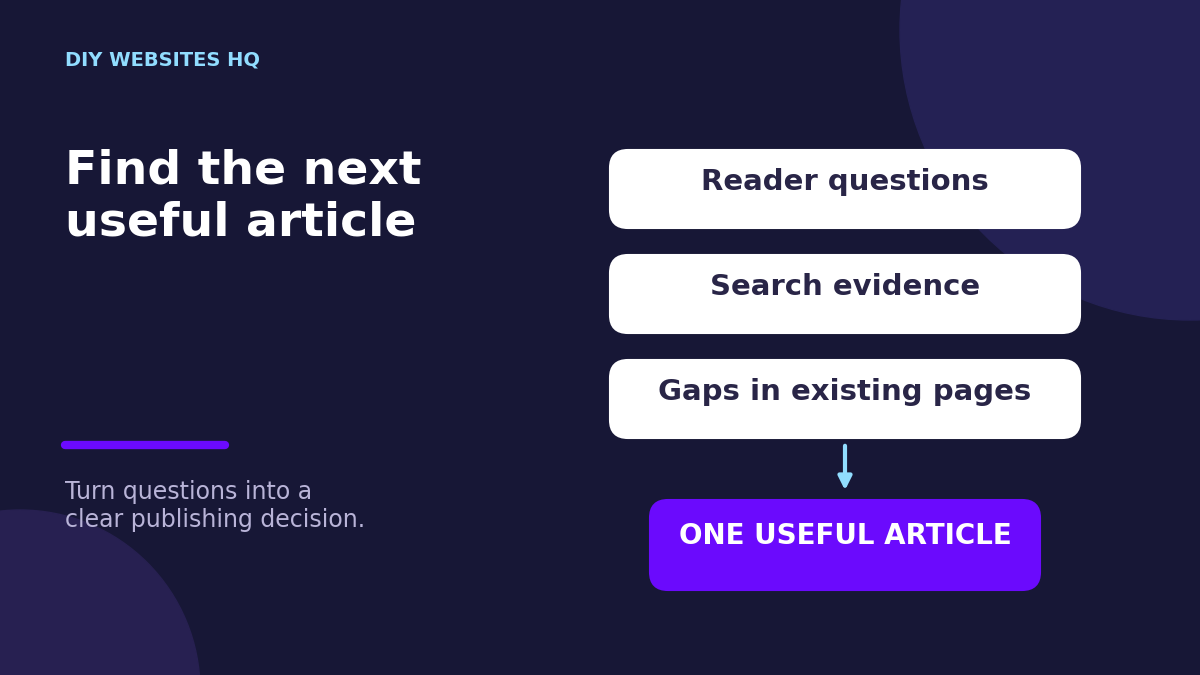
Return to the puzzle-storage example. “Best puzzle accessories” leaves a writer with a large, vague subject. “How can I store a half-finished puzzle in a small apartment?” points to decisions the reader needs to make: available space, whether the board must move, how pieces stay secure and what the product can actually hold.
Before writing, list the evidence you can obtain. You might measure your available shelf, photograph a storage problem, compare published board dimensions or explain a product you have used. Identify which work is firsthand and which is research. This makes the page more useful without inventing a personal test.
For a broader planning exercise, use our website idea guide. If you are starting with a hobby, the small-space puzzle example shows how to narrow the audience.
Build an answer that a person can inspect
Use a short opening that addresses the main question. Follow it with the conditions that change the recommendation. A reader choosing storage needs dimensions and limitations, not a decorative score claiming one board is “97 percent AI optimized.”
A comparison table works when each row uses matching criteria. A photograph helps when it shows a meaningful feature or measurement. A checklist helps when someone needs to repeat a task. Choose the format after identifying the job. You do not need to turn every paragraph into a question or make every page the same length.
Keep changing information close to its source. If a feature or subscription allowance changes, update the affected comparison and note when the information was checked. Our product comparison guide explains how to keep the criteria consistent.
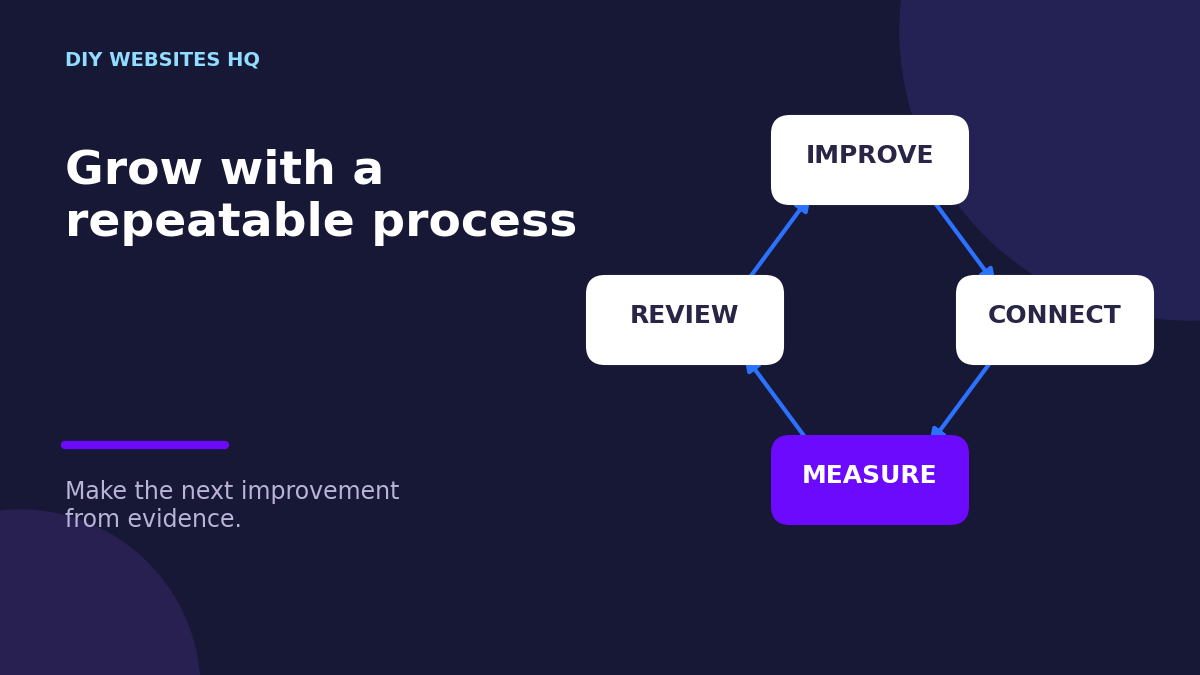
Use this improvement sequence
One page, four useful stages
Can readers open the page?
Is the answer clear?
Can claims be assessed?
Is there a useful next step?
First inspect the public page rather than only its editor. Next read the opening without the rest of the article: does it tell someone why to continue? Then challenge each important claim. Finally check the links a reader is likely to use. This sequence prevents a small publishing issue from being buried under another round of content production.
Connect the guide to the rest of your website
A useful answer should have a place in a coherent library. Link from an introductory guide to the focused tutorial that completes the next task. Link back when the reader needs broader context. Write anchor text that names the destination, so people can decide whether to leave the current page.
On DIY Websites HQ, a beginner can move from website planning to publishing, search setup and content improvements. The new AI search guides extend that path. They do not require replacing the domain, theme or entire structure. Our internal linking guide offers a practical way to map those connections.
A first work session you can finish
Set aside a short session for one page. Use the first part to identify the reader’s main decision. In the puzzle example, write the actual constraint: a board must fit under a particular piece of furniture, or the project must move when the table is needed. A constraint makes the research useful.
Next inspect what the draft already provides. Highlight unsupported claims and vague recommendations. Replace one vague passage with an explanation based on evidence you can obtain. If you do not have the measurement yet, leave a research note in the draft rather than inventing it.
Finish by checking the public page and one next-step link. Record what changed. This is an illustrative work plan; it does not estimate how long Google or an assistant will take to process the page. The completed result is an improved answer and a record of your check.
Keep the scope small enough to verify. If the proposed improvement is a clearer comparison table, define its criteria and check the public table. If it is crawler access, identify the relevant system and restriction. A concrete deliverable makes the work easier to review and the next decision easier to make.
Questions to ask before buying a GEO service
Ask the seller to name the pages, tasks and deliverables included. A useful proposal might identify unclear product information, inconsistent author details or a technical access issue, then explain how the work will be verified. It should distinguish a publishing correction from an expected commercial result.
Ask which system the service addresses and how it measures results. An isolated screenshot of a brand mention is not a complete traffic report. A proprietary score may help organize that seller’s workflow, but you need its definition before treating it as evidence.
Finally ask what ongoing work remains yours: source updates, product testing, editorial review and reader support. Choose a service because its concrete work fits your needs. You can apply the same questions to a plugin, course or consulting proposal without assuming the newest label creates a new requirement.
Measure appearances, visits and results separately
A citation in an AI answer is different from a visit to your website. A visit is different from an affiliate click, and a click is different from a confirmed commission. Choose a measurement that matches the claim you want to assess.
For example, if you clarify an article’s introduction, record the date and the changed section. Later compare relevant reporting windows, noting how much data is available. An increase after an edit does not establish that the edit caused it. Keep the observation useful without presenting a small sample as a breakthrough. The AI citation and traffic guide shows how to organize that record.
Choose your next guide
- Google AI Overviews and AI Mode: understand the Google-specific foundations.
- ChatGPT search discovery: understand access and public content.
- AI-assisted SEO workflow: turn a brief into checked improvements.
- AI citations and traffic: separate visibility from outcomes.
- WordPress AI search checklist: review one public page in a repeatable order.
Choose the guide that matches your current problem. If your first website is not built yet, begin with Start Here and the free WA Starter explanation. Tools become easier to assess when you know the job you need them to do.
Sources and further reading
Provider guidance checked October 31, 2026. Workflows and hypothetical examples are editorial guidance; they do not promise indexing, citations, traffic or income.