Sherry Wood
A useful affiliate product review helps a reader decide whether something fits their situation. It explains the conditions behind the recommendation, the evidence available and the limitations that might change the answer. The affiliate link is a next step after that work, rather than the reason the page exists.
A verdict readers can use: “Choose this option if you want a simple setup and can live without advanced reporting. If reporting is essential, compare alternatives before buying.” Follow your verdict with what you tested, what you verified from published sources, and any limits that could change the recommendation. If you are reviewing two options side by side, use the free product comparison template.
Before writing, decide what kind of review you can honestly produce. A hands-on review describes your own use and observations. A research-based assessment compares documented information and identifies what you could not test. Both need care, but they should not be presented as the same thing.
Affiliate disclosure: I may earn a commission if you join a paid plan through my links, at no extra cost to you. DIY Websites HQ is independently operated.
In this guide
Begin with the reader’s decision
Name the decision in plain language. A beginner choosing a desk lamp may care about space, controls, light placement and whether the base fits beside a monitor. An experienced hobbyist may have a different set of requirements. “Is this good?” becomes much more useful when you explain “good for whom and for what job?”
Write those conditions at the top of your brief. List the features that matter to the job and the evidence needed to assess them. If the reader needs a quiet appliance, a feature list that never addresses noise will leave the main decision unresolved.
Keep one product review focused on that product. If the real question requires several alternatives evaluated side by side, use a comparison article or link to one. The formats can support each other without repeating the same page under two titles.
State what you actually checked
Describe the basis of the assessment near the beginning. If you used the product, explain the relevant setting, version or configuration and the period of use accurately. If you researched it, identify the official specifications and documents used. Do not turn “I read the manual” into “I tested every feature.”
Keep observations specific. A note that a storage lid needed extra vertical clearance is more informative than “the design is bad.” Explain the condition under which the issue appeared so someone with a different shelf can judge whether it affects them.
A useful evidence note might read: “Dimensions checked against the manufacturer’s current specification; fit assessed against an example shelf measurement; durability not tested.” That short statement tells the reader exactly how far the conclusion can travel. Keep the note beside the assessment, where it can shape the decision, rather than placing it in a distant policy document. Revise it whenever the actual scope of your work changes.
Google’s review guidance encourages evidence, meaningful comparisons and discussion of advantages and disadvantages. Use those principles to make the reasoning inspectable. Do not manufacture tests, scores or photographs to create the appearance of first-hand evidence.
Build an evidence sheet before the draft
Create a simple record with five columns: claim, source, date checked, your interpretation and unresolved question. A manufacturer’s capacity claim belongs in the source column. Your explanation of what that capacity means for a particular reader belongs in the interpretation column.
Save the exact model name and version. Similar product names can hide different specifications, accessories or compatibility requirements. A review that combines details from several versions may look thorough while giving the reader an answer that fits none of them.
When evidence conflicts, explain the conflict or leave the claim out until it is resolved. You do not need to fill every paragraph with certainty. A clear statement that a feature was not verified is more useful than a confident guess.
Plan the time around evidence, not the word count
A review may need a long testing period even if the final article is concise. The example below shows how a modest research and writing project might be organized. It does not establish a universal production time, and it should never be used as a reason to shorten a necessary test.
Illustrative allocation for a modest review. Hands-on testing can require much longer and is not limited by this example.
- Reader and criteria45 minutes
- Evidence gathering120 minutes
- Analysis and draft105 minutes
- Visuals45 minutes
- Verification45 minutes
Scale: 0–120 minutes. Values are shown beside each label.
The largest block belongs to gathering evidence. That includes reading documentation, making observations and checking the details that support the verdict. Writing becomes easier when the relevant facts and unresolved points are already organized instead of being discovered halfway through the conclusion.
Leave a separate verification block. That is where you compare the finished draft with the evidence sheet, test links and inspect the live page. A review can acquire errors during editing even when the original research was sound.
Put a qualified verdict near the top
Readers should not have to scroll through a long introduction to learn your conclusion. State who the product may suit, the main reason and the most important condition. Then give the detail that allows the reader to assess that judgment.
For example: “This compact organizer may suit a shallow shelf if you want removable sections, but check lid clearance before buying.” That is a hypothetical verdict showing structure, not a recommendation for a particular product. It gives the reader a useful condition to investigate.
Avoid a universal winner when the evidence supports only a narrower conclusion. A product can be convenient, expensive, difficult to clean and appropriate for one setting at the same time. A good verdict explains that combination rather than flattening it into five stars.
Explain benefits through practical consequences
Translate a feature into the task it affects. A removable container can simplify cleaning. A long cable may offer more placement options. A compact base may leave room on a crowded desk. Then explain the limitation or setting that makes the feature relevant.
Keep measurements separate from impressions. If you measured a dimension, give the method and units. If you are describing a feeling about convenience, call it an observation rather than presenting it as an objective score. Do not invent a numeric rating merely because a chart looks more impressive with numbers.
Use tables when the information is parallel. A compact specification table can make verified details easy to compare. Use paragraphs for reasoning, uncertainty and context. Readers need both the facts and an explanation of why they matter.
Make the disadvantages useful
A disadvantages section should identify real trade-offs. “It is not free” adds little to a review of a paid product. A more helpful limitation might concern replacement parts, storage clearance, required subscriptions or a feature unavailable on the plan you assessed.
Explain who would care. A heavy tool may be acceptable for a fixed workbench and inconvenient for someone carrying it between rooms. A short trial may be enough for a simple interface check and insufficient for evaluating a long-term workflow.
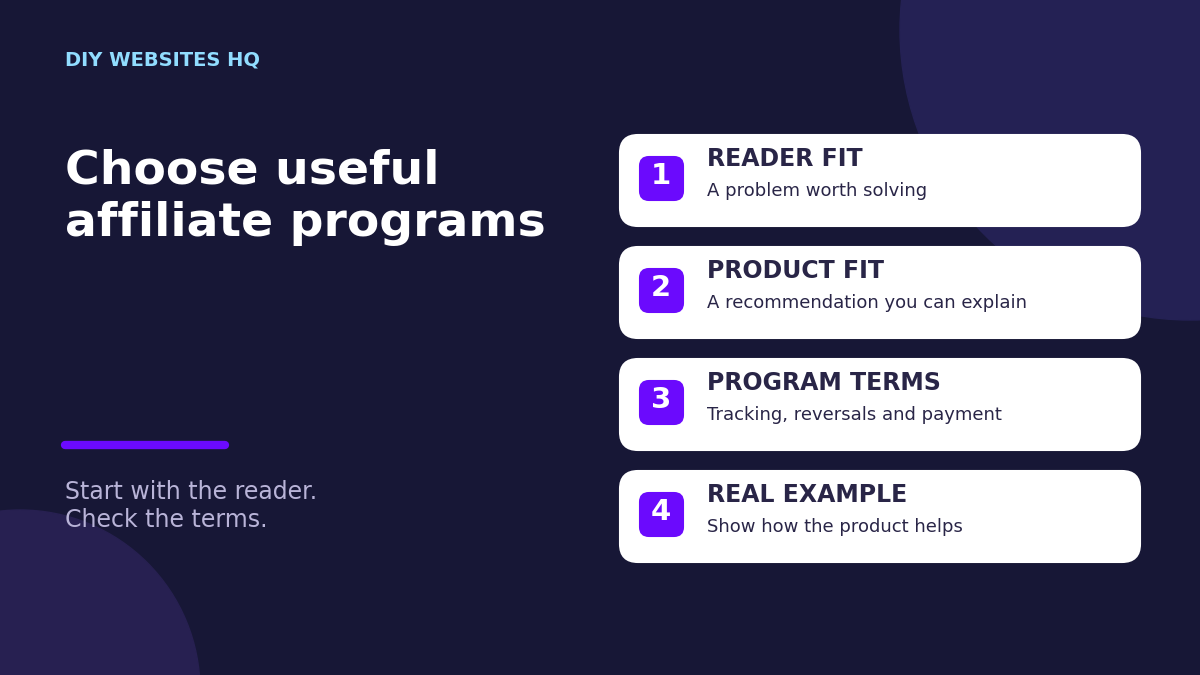
Include an alternative when it resolves a meaningful drawback. The alternative does not need to carry an affiliate link. It may be a smaller product, an existing tool or waiting until the reader has confirmed compatibility. Our program-selection guide keeps commercial fit separate from reader fit.
Place disclosure and links where they make sense
Tell readers when you may receive a commission. The FTC’s endorsement guidance explains why a disclosure needs to be clear and noticeable. Keep the explanation near the recommendation rather than relying only on a separate policy page.
Label the action accurately. “Check current options” is appropriate when the destination shows plans. “Buy now” is misleading if the reader is actually opening an information page. Preserve the exact affiliate link format required by the program and check its current rules before shortening or modifying it.
Google documents sponsored link attributes for commercial links. Those attributes do not replace a disclosure written for people. Your page needs a clear explanation of the relationship as well as suitable link markup.
Finish with a maintenance note
Products, prices and software interfaces change. Record when the important details were checked and what would trigger an update. A changed subscription allowance may alter the verdict even if the rest of the article remains useful.
Keep the original URL when you are improving the same review. Check the title, images, comparison table and links together so the conclusion still matches the evidence. Our older-post update guide provides a practical review sequence.
Questions about honest reviews
Can I review something I have not used?
You can publish a research-based assessment if you identify it accurately and support its claims. Avoid first-person descriptions of testing, ownership or results you did not experience. Choose a title and introduction that make the scope clear.
Does every review need a score?
No. A clear verdict and well-explained criteria can be more useful than an arbitrary number. If you use a score, publish the method and apply it consistently. Do not give a high score simply because the program pays a commission.
What should I check before publishing?
Verify the model, plan, links, disclosure, image rights and important claims. Preview the page, then inspect the public version. Make sure the reader can understand both your conclusion and the evidence behind it before deciding to follow a commercial link.